
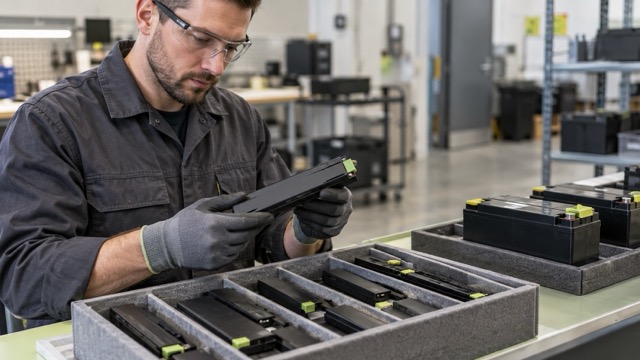
Plan battery recycling around chemistry, condition and the equipment the batteries support. ecoTech helps organizations review battery streams and coordinate an approved collection and recovery approach before material is moved.
Give batteries a defined place in your recovery program
Batteries can appear throughout an electronics retirement project, from laptops and mobile devices to backup-power equipment. Identifying them early helps your team establish suitable handling and avoid mixing items into a collection that was not designed for them.
We start with the battery types, quantities, condition and location. Our routine battery drop-off service is for non-damaged batteries; other conditions and larger systems require a specific review. Contact us before arranging shipment or bringing an unfamiliar battery type to a collection point.
What we need to know about your batteries
- Chemistry and product identification, where known
- Quantity, approximate weight and battery or pack size
- Whether batteries are loose, removable or installed in equipment
- Condition, including swelling, leakage, physical damage or recall status
- Current storage arrangements and collection location
- Any available manufacturer or safety documentation
This review establishes what the program can accept and what needs a different arrangement. Do not assume that a program for portable batteries also covers vehicle batteries, large energy-storage systems or damaged packs.
Separate routine retirement from damaged battery needs
Battery condition can change the handling and transport requirements. PHMSA’s lithium battery transportation guidance identifies added concerns for damaged, defective and recalled batteries. Tell us about these conditions before any collection is scheduled; acceptance is subject to review.
Do not place batteries in a general electronics drop-off container unless that program expressly permits them. Our municipal and container programs use defined acceptance instructions, and batteries may require a separate collection route.
For installed systems or equipment with difficult-to-access batteries, identify who is responsible for safe removal. A recycling arrangement does not, by itself, authorize electrical work or battery dismantling.
Connect battery management with the rest of the project
Battery planning can be incorporated into electronics recycling, facility cleanouts and data center decommissioning. Separating the battery scope allows the main equipment collection and the battery arrangement to be coordinated without assuming identical handling.
For facilities generating batteries repeatedly, a defined program can establish the accepted types, site responsibilities, collection triggers and records. If other regulated materials are involved, discuss them through our universal waste management service.
Set the documentation requirements in advance
Your environmental or facilities team may need records of material type, quantities, origin, collection dates and the approved processing route. We agree on the documentation included in the service scope and how it will be organized.
Keep descriptions specific enough to distinguish different battery streams. That makes future collections easier to plan and helps your team interpret the program’s results.
Questions about battery recycling
Can I include batteries with our computer recycling?
Tell us which batteries are present, whether they are installed or loose, and their condition. We will review the appropriate arrangement before confirming the collection.
Do you accept swollen or damaged batteries?
These require advance assessment and must not be treated as a routine drop-off or shipment. Contact us with the product details and condition so a suitable next step can be determined.
Can you review UPS or energy-storage batteries?
Yes, we can discuss the project requirements. Provide the system details, battery chemistry, quantity, condition and installation status. Acceptance, removal responsibilities and logistics need to be confirmed for the specific project.
Start with a battery assessment
Send ecoTech the battery details, locations and expected timing. We will help determine the scope needed for an appropriate collection and recovery arrangement.