Secure, accountable technology recovery programs designed for public-sector requirements, operational transparency and community access. ecoTech helps government agencies and municipalities plan equipment retirement with clear responsibilities and documented outcomes.
Public-sector programs built for accountability
Government technology programs must balance information security, procurement requirements, environmental responsibility and public trust. A department clearing obsolete computers and a municipality hosting a resident collection event have different needs, even when both projects involve electronics recycling.
We configure the program around your agencies, facilities, residents, equipment mix and reporting requirements. Your team can establish the collection and security arrangements before work begins, with a defined contact for coordination and a clear plan for final documentation.
Programs we support
- Municipal electronics collection events
- Permanent drop-off and container programs
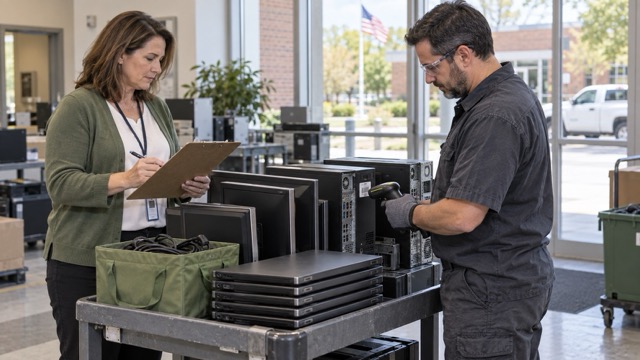
- Government office and agency equipment cleanouts
- School district and library technology refreshes
- Secure handling and destruction of retired data-bearing assets
- Project records for public reporting and sustainability documentation
Internal agency retirements can be planned through electronics recycling and IT asset disposition. For resident-facing services, our municipal recycling and container programs address collection access, accepted materials and servicing arrangements.
Connect procurement requirements with field operations
Share the service specification, procurement timeline and documentation requirements during planning. We can review the requested scope against the locations, equipment and work involved, including site access, department contacts and any required asset identification.
Your agency should identify equipment subject to retention requirements, legal holds, surplus-property rules or restrictions on resale. Clear release authorization helps the collection team distinguish equipment approved for retirement from assets that must remain under agency control.
Where several departments participate, shared instructions make the program easier to administer. The reporting plan can preserve department and location references so staff can reconcile their own equipment after the collection.
Protect agency data and set clear expectations for residents
Agency devices may contain employee, resident or operational information. Define the custody controls, processing method and records required through secure data and media destruction. Sensitive agency assets should use the specifically agreed handoff process.
A public drop-off program requires its own resident instructions and collection terms. It should explain accepted items, device preparation and how questions are handled. Batteries and damaged items need clear direction so they do not enter an unsuitable collection stream.
The EPA recommends certified electronics recyclers for businesses and government organizations. During vendor review, request current documentation for the facility and services relevant to your program.
What your organization receives
Program coordination
A defined plan for collection sites, events, schedules, participating departments and the contacts responsible for each handoff.
Documented asset handling
Agreed custody and data-security records that reflect the equipment and processing included in the project.
Usable reporting
Collection and outcome records for internal review, stakeholder questions and sustainability reporting. Specify the required fields and reporting dates before the program starts.
Questions from public-sector teams
Can one program cover agency assets and resident collections?
Yes, with separate handling and reporting requirements where needed. Agency assets requiring controlled custody or individual records should be identified distinctly from a general public collection.
Can we require reports by department or collection site?
Discuss those requirements during scoping. The collection process needs to capture the identifiers used to group and reconcile the final records.
Can the program accommodate surplus-property restrictions?
Bring the applicable release and disposition requirements to the initial discussion. We can define the service around your authorized decisions, including any limits on reuse or resale.
Plan your public-sector program
Contact ecoTech with your facilities, collection goals, procurement schedule and reporting needs. We will help define a practical program for the people responsible for running it.