
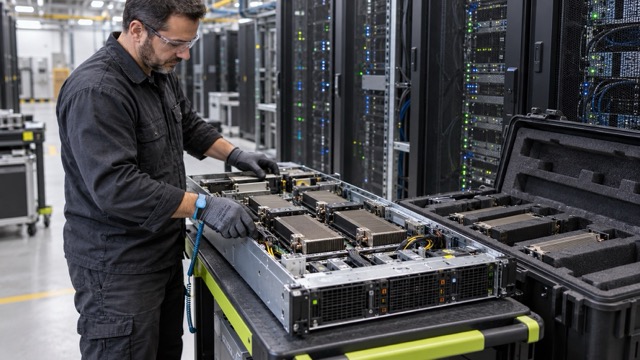
Manage the retirement of compute, storage and networking equipment with attention to asset value, stored information and facility requirements. ecoTech supports IT asset recovery and electronics recycling for AI infrastructure and data center environments.
Plan recovery around the hardware transition
A compute refresh can release equipment in stages as workloads move and replacement capacity becomes available. The recovery plan needs to follow those release dates, distinguish reusable assets from equipment approved for recycling and preserve the identifiers your team uses to track the hardware.
We work with infrastructure, facilities and asset-management teams to define that plan. Whether you are retiring a server generation, consolidating storage or clearing a colocation space, the scope should connect the equipment list with the authorized next step for each asset group.
Equipment to evaluate
- GPUs and accelerator hardware
- Rack-mounted, blade and other enterprise servers
- Storage arrays, hard drives and solid-state drives
- Switches, routers and network components
- Memory, processors and other reusable server components
- Racks, cables and related equipment, subject to project review
Provide model numbers, configurations, quantities and condition where available. Include ownership restrictions, warranties relevant to transfer and any components that must remain with the facility. Installed power systems, cooling equipment and batteries require separate scoping.
Assess value at the asset and component level
Useful equipment may retain demand after it leaves your environment. Our ITAD and value recovery service reviews eligible hardware against specifications, condition and current market demand.
Detailed configurations matter. A broad description such as “GPU server” may not identify the components or condition needed for a meaningful evaluation. Share the available inventory early, and define how inspection results, recovery decisions and commercial settlement will be reconciled.
Reuse remains subject to your authorized disposition rules. Hardware that cannot enter a suitable reuse route can be directed to electronics recycling.
Account for storage and other retained information
Your technical team should identify the media and devices that may retain information and establish their release conditions. A refresh of compute hardware can also involve boot drives, local storage, management systems and supporting equipment with separate data requirements.
We scope data sanitization and media destruction around the equipment identified and the required evidence. NIST’s media sanitization guidance is a useful reference when defining a program’s methods and controls.
Coordinate removal with site operations
For rack or facility retirements, our data center decommissioning service addresses asset release, access windows, removal planning and project reconciliation. Your infrastructure team controls shutdown and production dependencies; the removal schedule follows those approvals.
If backup-power equipment is included, identify the batteries and installation status early. Battery management requires a defined assessment and collection arrangement.
Close the project with usable asset records
Agree on the relationship between your inventory and the final report before equipment moves. Useful fields can include asset IDs, serial numbers, configurations, collection location, data-processing results and the approved recovery or recycling outcome.
For phased projects, keep each release group identifiable. That helps your teams track what has left the facility, what has completed processing and which exceptions still require a decision.
Questions from infrastructure teams
Can GPUs be evaluated separately from complete servers?
Yes, discuss the configuration and approved disposition. Component-level evaluation may be useful, but handling costs, condition and market demand influence the recovery opportunity.
Can collections follow a phased hardware release?
Yes. We can review the planned release groups and access windows, with collection and reporting requirements defined for each phase.
Do you take responsibility for shutting down production systems?
Shutdown, workload migration and release authorization remain with your designated technical teams unless specific work is expressly included in the scope. Clear responsibilities help keep recovery activity coordinated with the operating environment.
Review your compute retirement plan
Share your hardware inventory with ecoTech, along with the locations, timing and security requirements. We will help define the evaluation, removal and documentation needed for the project.