Give residents a clear, practical way to recycle unwanted electronics. ecoTech helps municipalities organize collection events and container programs with defined acceptance rules, collection arrangements and reporting.
A collection program residents can use and staff can manage
Successful community recycling starts before the first item arrives. Residents need to know what is accepted, where to bring it and how to prepare it. Staff need a workable site layout, collection schedule and a clear response when someone brings an item outside the program.
We work with your recycling coordinator, public works department or program administrator to connect those decisions. The collection model should reflect expected participation, available space, staffing and the types of electronics your community generates.
Choose the right collection format
Municipal electronics collection events
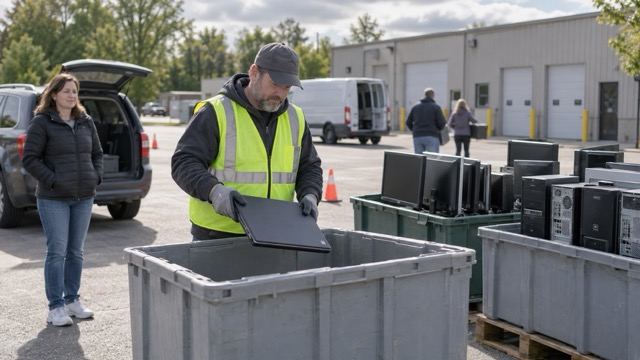
A scheduled event can serve residents at a designated place and time. Planning covers the equipment list, expected volume, traffic and unloading arrangements, staffing responsibilities and the movement of collected materials.
Permanent drop-off and container programs
A fixed collection point can provide ongoing access. ecoTech’s container programs, including the Green Box Project, offer a way to organize electronics collection at suitable locations. Site access, oversight, servicing and the materials permitted in the container should all be established before launch.
Collections across several community locations
Libraries, public facilities or other approved sites may form part of a coordinated program. A shared set of instructions helps avoid conflicting messages about accepted items, hours or participant eligibility. Collection arrangements are defined for each location.
Set acceptance and data-handling expectations clearly
The final accepted-items list depends on the program. Computers, monitors, printers and other common electronics can be reviewed during planning. Batteries, damaged equipment and specialty items require separate consideration; they should not be added to a general electronics container without approval.
For public drop-off containers, the collection conditions differ from a scheduled handoff of agency assets. Resident communications should explain device preparation and the program’s custody and data-handling terms. Organizations requiring controlled transfer or asset-level destruction records should arrange a defined service through secure data and media destruction.
The EPA’s guidance for choosing an electronics recycler can help program sponsors evaluate processing arrangements. Confirm the services and facility scope that will support the collection.
Plan the records alongside the logistics
Decide which results the program needs to report. These may include collection dates and locations, quantities or weights received and documentation of processing. Resident participation figures require a collection method of their own; they should not be inferred from the weight of material collected.
Our reporting service can help organize project records for municipal staff and stakeholders. For broader agency retirement needs, see our approach to government and municipal technology programs.
Questions about municipal collection programs
Can an event and a permanent drop-off program work together?
Yes. An event can address concentrated demand while an approved permanent location provides ongoing access. We can review whether that combination fits your anticipated volume and available resources.
Are collections free for every resident and every item?
Program eligibility, funding and item-specific charges depend on the arrangement and applicable requirements. Confirm those details before publicizing the service so residents receive accurate instructions.
Can batteries be collected as part of the program?
Battery collection needs a separately agreed process. Tell us the anticipated battery types and quantities so we can review options through battery management. Do not assume an electronics container accepts loose or damaged batteries.
Plan a program for your community
Contact ecoTech with your proposed locations, timing, estimated volume and collection format. We will help define a program your staff can operate and your residents can understand.